Everything you need to understand the anime merchandise category: who buys it, what sells, which licenses are worth watching, and how to build an anime range that works in mainstream retail. Written for EU and UK wholesale buyers.

In this guide
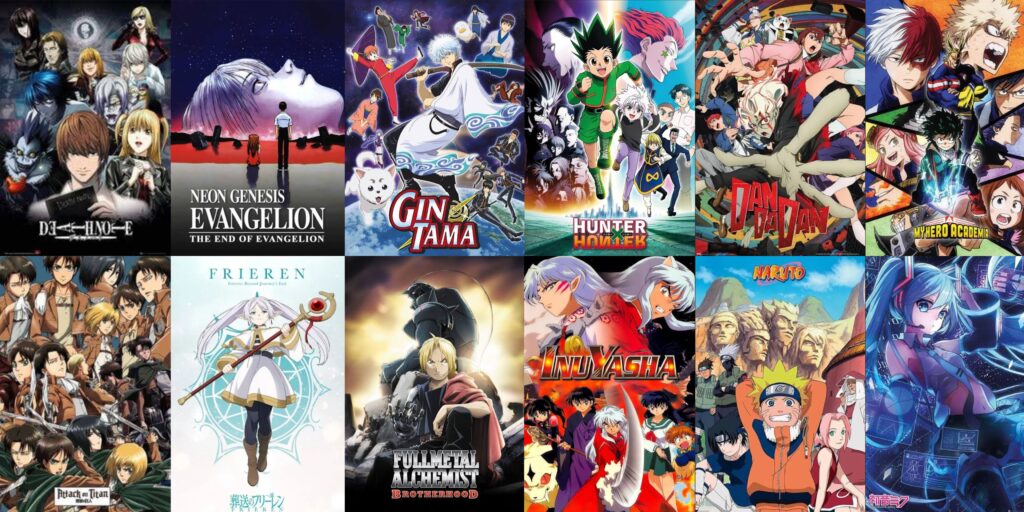
The Anime Market: Why Now
The commercial case for ranging anime
Anime is no longer a niche category. It hasn’t been for several years, but the data makes the case increasingly difficult to ignore.
The global anime market reached an estimated $37.7 billion in 2025, with Grand View Research projecting the market to reach around $77.2 billion by 2033. Merchandising accounted for more than 31% of anime market revenue in 2025, making merchandise one of the category’s major commercial engines.
These are not niche numbers. They represent a global entertainment category with a substantial merchandise ecosystem.
What’s changed isn’t the quality of anime. That’s been exceptional for decades. What’s changed is accessibility, discoverability, and cultural legitimacy.
Streaming platforms have removed many of the barriers between European consumers and Japanese series. Netflix reported that more than 50% of its global members watched anime in 2024, while anime was viewed more than one billion times on the platform during the year. Crunchyroll, meanwhile, has become a global specialist platform rather than a niche service. Sony reported that Crunchyroll had surpassed 15 million paid subscribers as of July 2024.
The Commercial Numbers at a Glance

The audience is enormous, highly engaged, and increasingly comfortable expressing that fandom through what they wear.
Anime has crossed into fashion, sport, and mainstream entertainment. Something difficult to imagine twenty years ago. Uniqlo, for example, has repeatedly designed anime collections, while major brands and public figures have increasingly incorporated anime into collaborations and cultural campaigns.
For retailers, this means consumers have changed.
The person who grew up watching Naruto may now be an adult with disposable income. They may no longer think of anime merchandise as something reserved for specialist conventions or dedicated fan stores. They may simply see a well-designed anime hoodie as another piece of clothing they want to wear.
The international market is also growing in importance.
According to the Association of Japanese Animations, the value of Japan’s anime market in 2024 reached approximately ¥16.7 trillion domestically and ¥21.7 trillion overseas. Overseas business therefore represented more than half of the combined market value.
That internationalisation changes the retail opportunity. European consumers aren’t simply consuming anime. They are increasingly part of the global commercial ecosystem around it.
Why officially licensed merch matters
Merchandising accounts for a significant share of the overall anime economy. But apparel and accessories give retailers something collectibles cannot always offer: repeat, everyday consumption.
A consumer who buys a Naruto cap is not necessarily the same consumer who once bought a Naruto figure. They may be older, more fashion-conscious, and more interested in integrating fandom into their everyday wardrobe.
Anime t-shirt wholesale and anime hoodie wholesale are no longer decisions reserved for specialist anime retailers. For the right store, they can belong alongside streetwear, licensed fashion, pop culture, and lifestyle products.
The retail opportunity for European and UK retailers
The opportunity isn’t simply to stock anime.
It’s about understanding which anime, which consumer, and which product format belongs in your store.
The category is broad enough to include:
- Evergreen shonen franchises
- Breakout streaming titles
- Dark, design-led new generation anime
- Lifestyle-oriented Japanese characters and cultural icons
- Apparel
- Bags and accessories
- Gifting
- Collectibles
Retailers who understand these distinctions have more opportunities to build a commercially coherent range rather than simply creating an “anime corner.”
Who Buys Anime Merch
Three profiles. One category. Different retail strategies.
The biggest misconception about anime merchandise at retail level is that it serves a single consumer. It doesn’t.
Anime merchandise reaches several overlapping audiences. Each behaves differently depending on the license, product, design, and retail environment.
For retailers, three useful profiles emerge:
A. The New Gen Fan
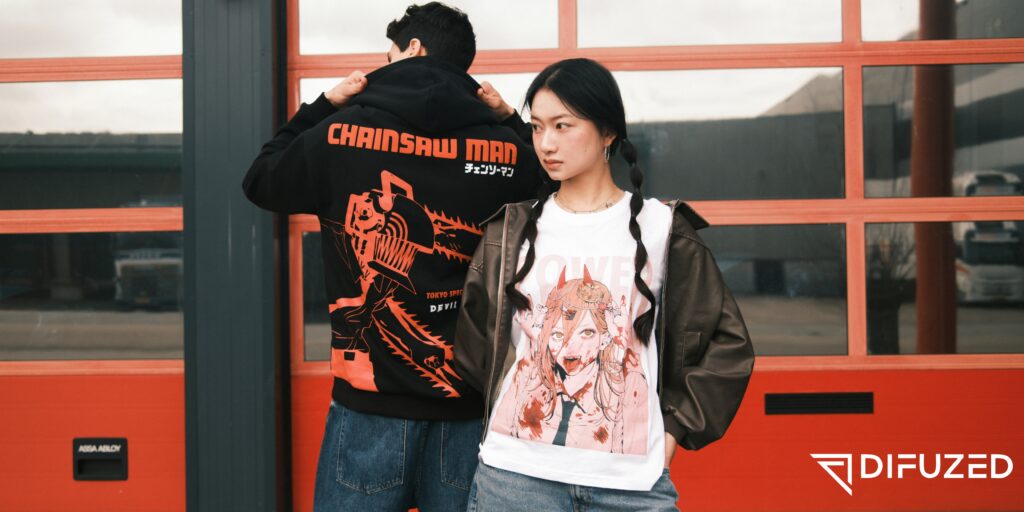
Frieren · Chainsaw Man · Dandadan · Jujutsu Kaisen
Age range: 16–28
Where they shop:
Online first. In-store when curiosity, demand, or experiential marketing is successful.
Purchase driver:
Release timing and design quality. This consumer is highly responsive to content moments: a new season, a theatrical release, a viral episode, or a character becoming culturally relevant.
Timing matters because attention is concentrated. If a title suddenly becomes the series everyone is talking about, the merchandise opportunity is happening at the same time.
What they buy:
Apparel designed as clothing first and licensed product second.
Graphic tees, hoodies, and caps are particularly relevant, but the design needs to feel native to the IP.
A Chainsaw Man t-shirt needs to look like something fellow Chainsaw Man fans can recognize. Simply placing a character image on a blank shirt is unlikely to have the same appeal as a considered design that reflects the series’ visual identity.
Gifting behaviour:
High.
This audience also influences purchases made by friends, partners and family members. Their recommendations can turn an unfamiliar anime into a gifting opportunity.
Retail implication:
Trend responsiveness matters more than scale.
Test emerging licenses with smaller orders. When a new anime starts gaining traction, bring in a focused selection rather than committing to a large range. Use sales performance to gauge demand, then expand the license if customers respond.
B. The Classics Fan
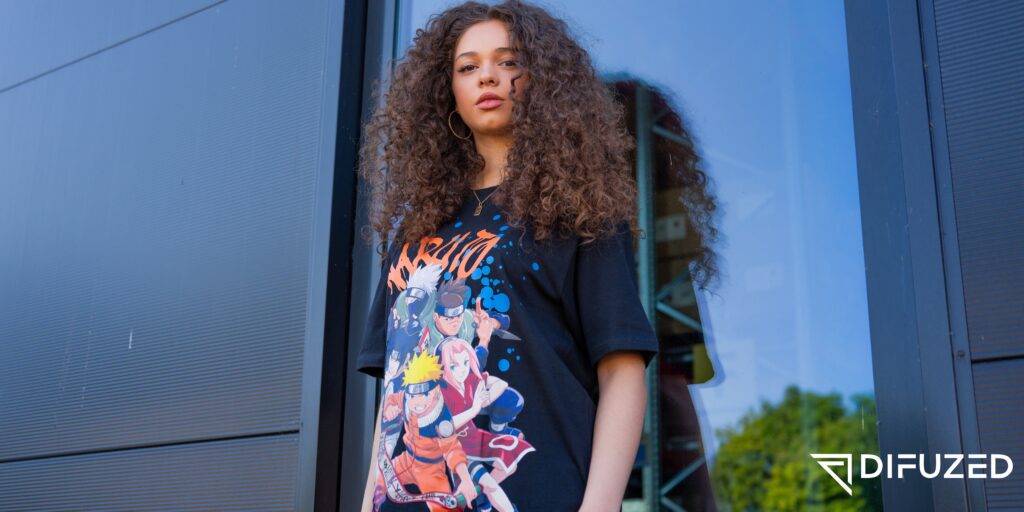
Naruto · Bleach · My Hero Academia · One Piece · Dragon Ball
Age range: 22–40
Where they shop:
Both online and in-store. This consumer can be highly brand loyal and is more likely to return when a range consistently delivers designs they want.
Purchase driver:
Emotional connection built over years. Unlike newer titles, classics don’t necessarily depend on one release window. A new arc, film, anniversary, collaboration, or nostalgia moment can reactivate interest.
What they buy:
A broad range of products. Apparel, accessories, bags, and gifting formats all have a place.
The major advantage of these licenses is recognition. Consumers may recognise Naruto or One Piece even when they would not describe themselves as active anime fans.
Gifting behaviour:
Extremely important. Parents buy for teenagers. Partners buy for each other. Friends buy for friends. Families request products for birthdays and Christmas. That makes established franchises particularly useful for retailers trying to make anime merchandise accessible to people who aren’t themselves anime specialists.
Retail implication:
Evergreen anime licenses offer dependable demand in an otherwise fast-moving category. They provide recognition, long-lasting relevance and an entry point for consumers who may be discovering anime merchandise through fashion rather than fandom.
C. The Lifestyle Fan

Hatsune Miku · Sanrio · Studio Ghibli
Age range: 18–35
Where they shop:
Fashion-forward independents, pop culture retail, lifestyle stores, and online marketplaces. This audience does not necessarily require a specialist anime store environment.
Purchase driver:
Cultural recognition creates impact rather than fandom alone. Consumers may not identify as anime fans at all. They may simply respond to Japanese culture, distinctive character design, nostalgia, or fashion relevance.
What they buy:
Wearable, design-led product. Tees, bags and accessories work particularly well. Lifestyle formats can be more commercially versatile than highly character-specific graphics.
Gifting behaviour:
Moderate. Purchases tend to be more personal, but the wider cultural recognition of these properties creates a larger potential customer base.
Retail implication
Lifestyle Anime licenses can be relevant outside of specialty anime stores and pop culture assortments.
They can be offered alongside fashion, accessories, streetwear or broader pop culture product. That makes them particularly useful for non-specialist retailers, and offers wider market possibilities.

One category, three audiences.
A well-ranged anime section can serve all three profiles without requiring them to compete with each other.
Classics provide evergreen relevance. New gen titles create urgency and trend-led demand. And lifestyle licenses bring in consumers who may not otherwise enter an anime section.
Knowing how to distinguish between these three customer categories enables retailers to create a range that can serve both committed fans and consumers who simply like the product.
10 Anime Licenses Worth Ranging
Commercial profiles of the titles driving anime retail
Not all anime licenses translate equally to retail.
Some have enormous audiences but limited relevance to a particular store environment. Others have smaller but highly committed fanbases. Some are evergreen. Others depend heavily on the content cycle.
The strongest ranges therefore combine recognition, relevance and momentum.
Below are some of the licenses retailers should understand when building an anime assortment.
-
Naruto
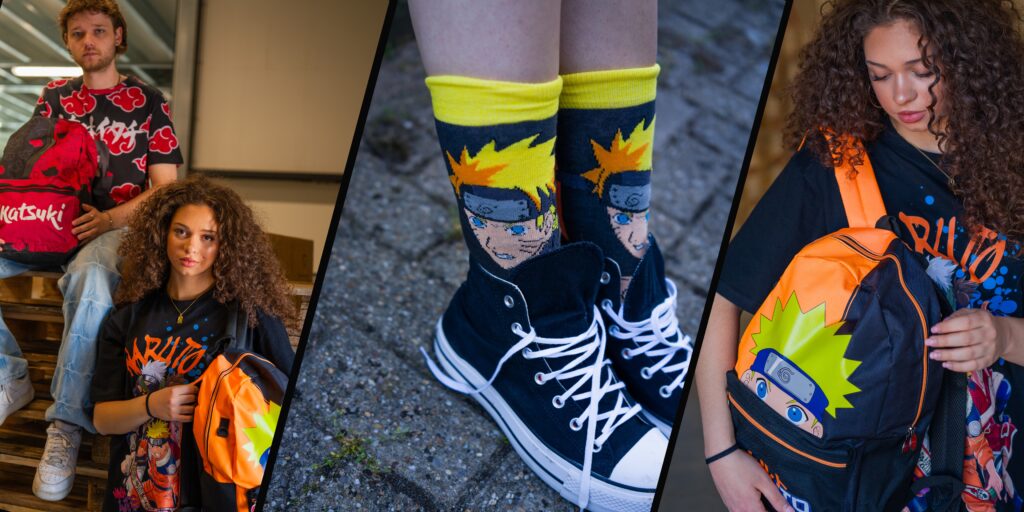
Classic · Shonen · Est. 1999
Naruto is one of the strongest evergreen anime properties for licensed apparel.
The manga has sold more than 250 million copies worldwide, giving the franchise an enormous established audience. [Source] Its longevity is commercially important. Naruto is simultaneously a nostalgia property for older fans and an entry point for younger consumers discovering the franchise through streaming, social media, and merchandise.
This makes Naruto particularly useful as an anchor license.
Officially licensed Naruto T-shirts, hoodies, caps, and accessories can work across both dedicated fandom environments and broader licensed fashion.
Retail takeaway: Evergreen recognition + cross-generational fandom = strong evergreen license.
Browse our expansive Officially Licensed Naruto merch here.
2. One Piece
Classic · Shonen · Est. 1997
One Piece is a license that’s popular at an extraordinary scale.
In March 2026, the manga surpassed 600 million copies worldwide, following the release of Volume 114. What’s more, the Netflix live-action adaptation has also introduced the franchise to consumers who may never previously have engaged with the manga or anime. That creates an unusually broad commercial audience. One Piece works particularly well as a lifestyle-oriented classic because its visual identity is recognisable even outside dedicated anime fandom.
Retail takeaway: One Piece is an evergreen property with both fandom depth and mainstream recognition.
3. Bleach
Classic · Shonen · Est. 2001
Bleach has benefited from renewed visibility through Bleach: Thousand-Year Blood War. The anime’s final cour, The Calamity, is scheduled for July 2026, keeping the franchise in an active content cycle.
This is a great example of older franchises regaining momentum when new content returns to screens. Bleach also has a particularly strong visual language, making it well-suited to graphic apparel.
For retailers, the opportunity is not simply nostalgia. It is the combination of an established fanbase and renewed content relevance.
Retail takeaway: An evergreen classic with a current content trigger.
4. Chainsaw Man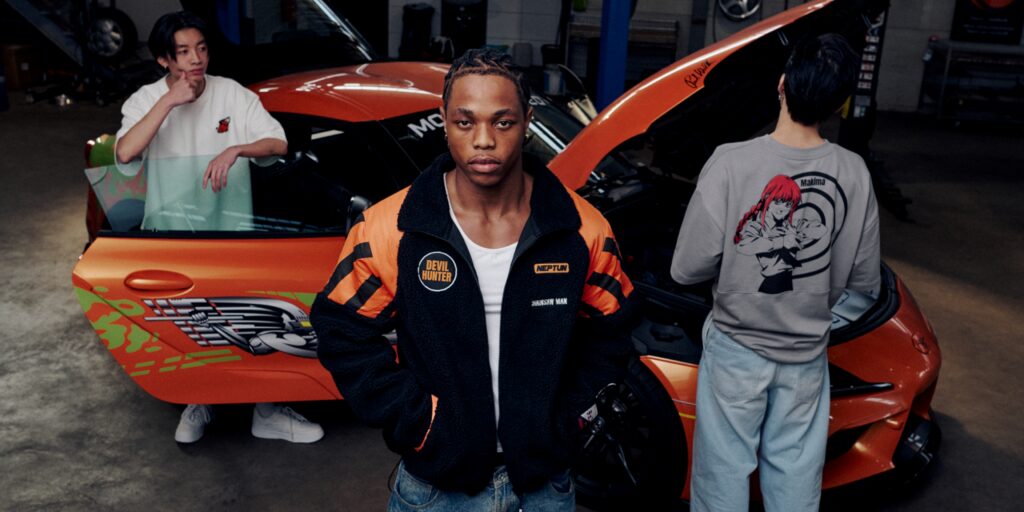
Neptun x Chainsaw Man 2025 Collection by Difuzed
New Gen · Dark Fantasy · Est. 2018
Chainsaw Man is one of the most visually distinctive new-generation anime properties of the decade. That makes it a particularly interesting IP for fashion.
Its aesthetic translates naturally into graphic apparel, particularly for consumers who want merchandise that feels like streetwear rather than conventional character merchandise. The theatrical Reze Arc also brought the franchise into a broader cinema environment, reinforcing its position as a major contemporary anime property. The film even received a 96% Tomatometer score and 98% audience score on Rotten Tomatoes, reflecting its strong reception.
Retail takeaway: Design-led IP with strong potential for fashion-oriented apparel.
Browse our fashion-led Officially Licensed Chainsaw Man merch here.
5. My Hero Academia
Classic / New Gen Bridge · Shonen · Est. 2014
My Hero Academia occupies an interesting commercial position. It bridges the classic and new-generation audiences.
The manga has passed 100 million copies in circulation, demonstrating the scale of its international audience. The series’ main manga run concluded in 2024, but its established characters, recognisable visual identity and large international fanbase continue to give the property strong merchandise potential.
For retailers, My Hero Academia can function as a bridge between established franchises and newer titles.
Retail takeaway: A strong transition license between classic and new-generation anime.
6. Frieren: Beyond Journey’s End
New Gen · Fantasy · Est. 2020
Frieren has become one of the standout modern fantasy manga and anime properties in recent years.
The manga has surpassed 32 million copies in circulation, demonstrating that its critical reputation has translated into substantial commercial reach. Its audience also makes it particularly interesting for apparel. Frieren has a more considered, understated visual identity than some of the louder shonen franchises. That creates opportunities for minimalist, fashion-oriented products.
With further anime content planned, this property also seems to have room to continue growing.
Retail takeaway: A strong option for retailers looking beyond loud graphic fandom products.
Browse our Officially Licensed Frieren merch here.
7. Dandadan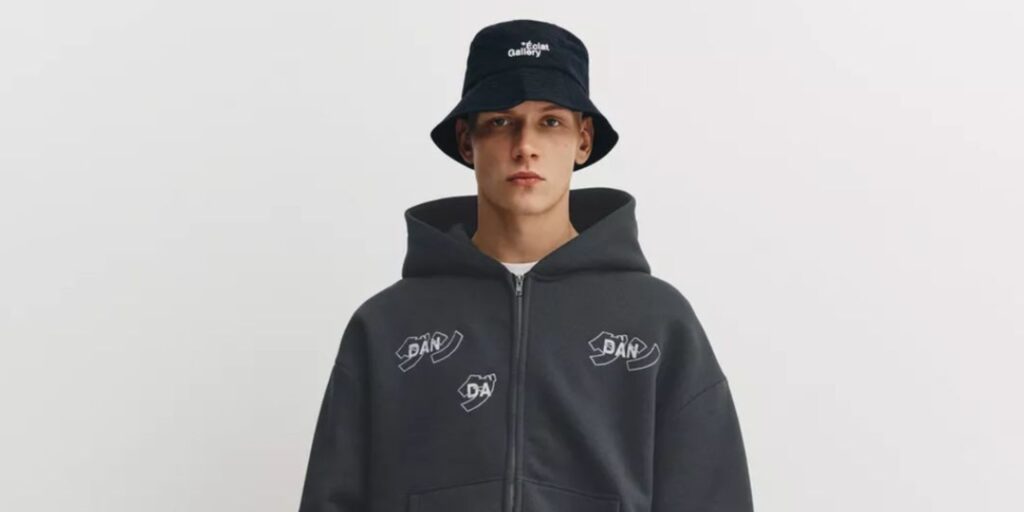
New Gen · Supernatural · Est. 2021
Dandadan stands out because it refuses to fit neatly into one anime category. It combines supernatural horror, sci-fi, comedy, and romance with an intentionally chaotic visual identity, giving it a very different proposition from more traditional shonen properties.
That distinctiveness is already translating into a substantial audience. The manga passed 10 million copies by April 2025, while Netflix reported 17 million views for Season 2 during the second half of 2025.
For retailers, Dandadan offers something different from the more established anime staples. Its distinctive characters, expressive artwork, and unconventional tone lend themselves particularly well to graphic-led apparel and accessories, giving the license potential to attract younger fans looking for merchandise that feels more individual and fashion-driven.
Retail takeaway: A newer property with growing audience recognition and strong design potential.
Browse our Officially Licensed Dan Da Dan merch here.
8. Demon Slayer
Classic / New Gen · Shonen · Est. 2016
Demon Slayer has turned its visual identity into one of the most recognisable looks in modern anime. The series is created around instantly identifiable characters, elaborate costumes, and a strong use of colour and pattern, giving its merchandise more visual range than a typical logo-led anime assortment.
Its appeal has also expanded well beyond the core series. The theatrical releases have turned new story arcs into major fan events, while collaborations with mainstream fashion retailers such as UNIQLO demonstrate how naturally the property can move between anime merchandise and everyday apparel.
This makes Demon Slayer particularly useful as a bridge between dedicated anime fandom and broader fashion-led merchandising. Character artwork, patterns and recognisable visual motifs can work across T-shirts, hoodies, accessories and lifestyle pieces without relying solely on a franchise logo.
Retail takeaway: A high-recognition anime property that can bridge specialist fandom and mainstream fashion retail.
Browse our expansive Officially Licensed Hatsune Miku merch here.
9. Hatsune Miku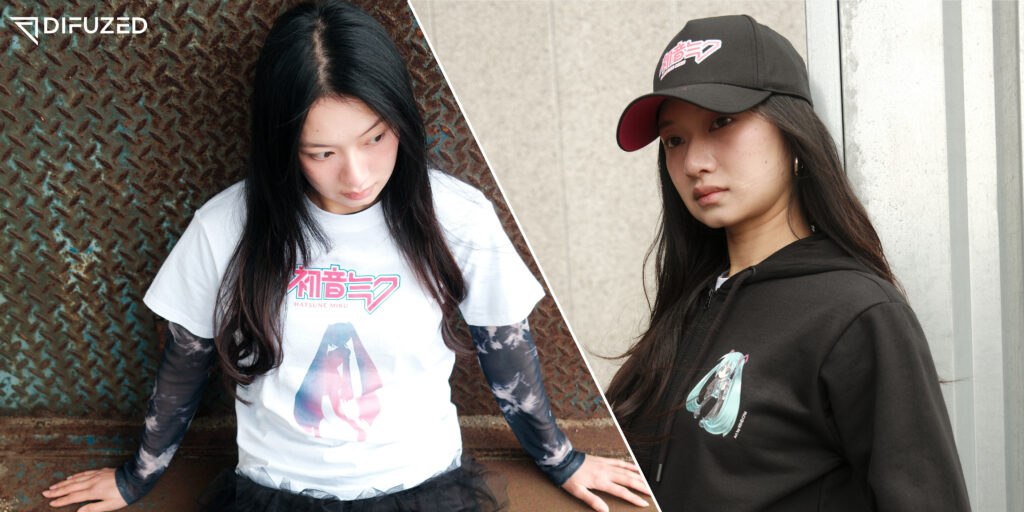
Lifestyle · Vocaloid · Est. 2007
Hatsune Miku is commercially unusual because she isn’t simply an anime character. She is a cultural icon built around Vocaloid technology, music, fan creation, and Japanese pop culture.
That makes the addressable audience broader than traditional anime fandom. Her visual identity also lends itself naturally to fashion, bags and accessories.
For retailers, Hatsune Miku can therefore sit in a different commercial space from properties such as Naruto or Chainsaw Man.
Retail takeaway: A lifestyle-oriented Japanese pop culture property with reach beyond traditional anime retail.
10. Jujutsu Kaisen
New Gen · Dark Fantasy · Est. 2018
Jujutsu Kaisen has strong commercial appeal because its characters have become as recognisable as the franchise itself. Gojo, Sukuna and other key characters give retailers multiple design angles, allowing product to target different parts of the fanbase rather than relying on one generic franchise graphic.
Its darker aesthetic also works particularly well across streetwear-inspired apparel and accessories, giving the license a strong fashion crossover.
Retail takeaway: A character-driven license with strong potential for graphic-led, fashion-oriented merchandise.
A high-recognition new-generation property where product design can be a major differentiator.
How to Turn Anime Fandom Into Retail Opportunity
Strategic principles for building an anime catalogue that performs
Ranging anime merchandise well isn’t about stocking the biggest possible rangeof licenses on the shelf. It’s about giving each anime license a clear commercial role within the assortment.
Established properties can provide dependable demand, newer titles can capture emerging fandom, and lifestyle-driven licenses can bring anime products into a broader fashion and gifting proposition. The strongest anime merchandise ranges balance these roles while offering products at different price points and for different levels of fan commitment.
The goal isn’t simply to offer more anime. It’s to build an anime merchandise range where each license brings something different to the customer, creates opportunities for multiple purchases, and gives retailers a reason to keep refreshing the category.
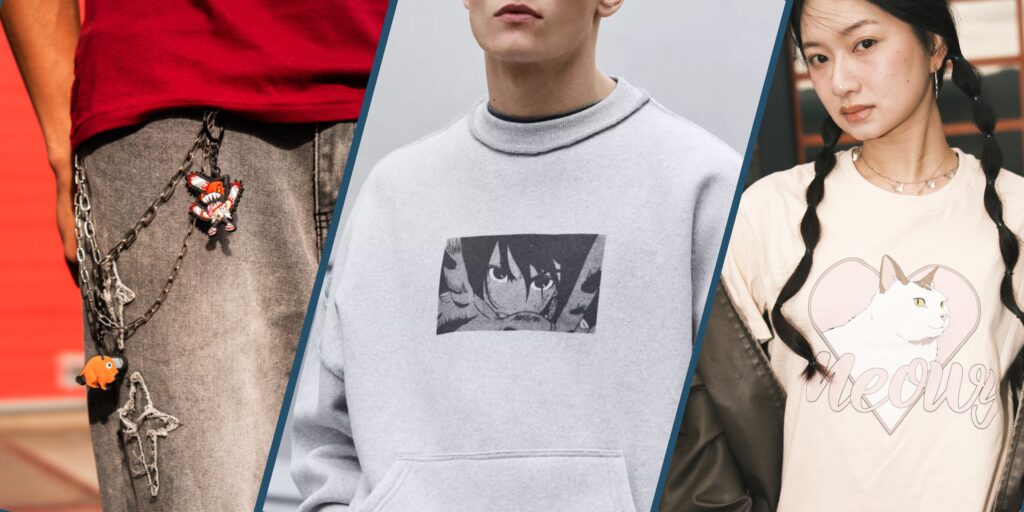
7 Steps to Build a High-Performing Anime Merchandise Range for Your Store:
1. Build your range around different types of customer demand
Don’t treat every anime license as having the same commercial role.
Start with established franchises such as Naruto, One Piece, Bleach, and My Hero Academia. These give shoppers instant recognition and provide a dependable foundation for the category.
Then add current and emerging titles such as Chainsaw Man, Frieren and Dandadan. These give the range freshness and allow you to respond to where fandom is moving.
Finally, consider lifestyle-led properties such as Hatsune Miku, Sanrio and Studio Ghibli. These can reach consumers who may not actively shop an “anime” section but will buy fashion, accessories or gifts connected to Japanese pop culture.
A simple rule: use evergreen licenses for stability, emerging licenses for growth, and lifestyle properties for reach.
2. Plan your buying around the entertainment calendar
Don’t wait until a new anime season, film, or major announcement goes viral.
Actively track new season launches, theatrical releases, anniversaries, streaming debuts, and major franchise announcements, then plan relevant stock ahead of those moments.
For each license, ask:
- What is coming up?
- When will consumer attention increase?
- Do we have relevant products available before that moment?
- Which products are most likely to benefit from the increased attention?
This turns the anime entertainment calendar into a retail buying calendar.
For Difuzed, this is particularly relevant because a broad licensed portfolio allows retailers to respond to multiple fandom moments rather than building their entire anime strategy around one franchise.
Contact us to explore the Anime content calendar and get ahead of any upcoming hype!
3. Use product variety to increase repeat purchases
Putting one T-shirt from ten different anime licenses on a shelf or landing page may look like variety, but it doesn’t necessarily create a strong assortment.
When you notice a particular license is performing, give your shoppers more than one way to buy into it.
For example, combine:
T-shirts → hoodies → caps → bags → accessories
This creates different price points and gives existing fans opportunities to purchase again rather than making the category dependent on one product.
You don’t need deep stock across every license. Use sales data to identify which licenses deserve a broader range.
4. Make the range easy for non-expert shoppers to navigate
Your customer isn’t always the fan.
A parent buying a gift, a partner shopping for someone who loves anime, or a consumer discovering a franchise through Netflix may not know the difference between one series and another.
Make the range easy to understand through:
- recognisable franchise branding
- clear visual grouping
- obvious character recognition
- accessible price points
- products that work as gifts
This is particularly important when selling anime merchandise outside specialist stores. The easier the category is to shop, the larger the potential audience becomes.
5. Treat design as part of the product, not an afterthought
A licensed product isn’t automatically a desirable product.
Anime fans can compare hundreds of designs online, including licensed fashion, collaborations, and fan-made artwork. Your product therefore has to compete on design as well as IP recognition.
When selecting anime merchandise, look for:
- artwork that feels true to the property
- designs that work beyond simply placing a logo on a garment
- strong character or visual recognition
- wearable graphics
- products that fit the aesthetic of the target consumer
This is where a specialist wholesale partner can add value. Difuzed develops licensed apparel, bags, headwear and accessories around the visual identity of each property, giving retailers a broader assortment to work with.
6. Test new licenses before giving them more space
You don’t need to predict the next breakout anime perfectly.
Test it.
Start with a focused selection at a manageable order quantity. Then look at:
- sell-through
- which designs perform
- which product types perform
- whether customers buy across the license
- whether demand continues after the initial launch
If the response is strong, expand the range. If it isn’t, you’ve limited your exposure.
This is where low MOQs become a commercial advantage. Difuzed’s low minimum order quantities allow retailers to test licenses and products without having to make a large initial commitment.
7. Refresh the category instead of waiting for it to decline
Anime is a content-driven category, so a range that never changes can quickly become less relevant.
Build a simple refresh cycle:
Keep: proven bestsellers and evergreen franchises.
Add: new licenses and upcoming content moments.
Test: smaller selections of emerging properties.
Expand: the licenses and designs that demonstrate demand.
Replace: products that no longer perform.
This creates an anime merchandise range that evolves with fandom instead of becoming a static collection of old releases.
The commercial principle
The goal isn’t to stock more anime merchandise.
It’s to create an assortment where established franchises generate dependable demand, new titles create discovery, lifestyle properties broaden the audience and the right products give fans multiple reasons to buy.
Hence, that is what turns anime from a collection of licensed products into a category with room to grow.
The Anime Retail FAQ
Questions retailers actually ask, answered directly
-
Is anime merchandise worth stocking if I don’t run a specialist store?
Yes.
Anime has moved well beyond specialist retail. The combination of mainstream streaming, fashion crossover, gifting and lifestyle-oriented Japanese properties means anime merchandise can work in fashion stores, pop culture retail, lifestyle stores and broader licensed retail environments.
The key is choosing the right licenses.
For example, a non-specialist retailer doesn’t necessarily need twenty anime properties. Two or three high-recognition licenses can provide a starting point.
-
Which anime licenses sell best in Europe?
There is no single universal ranking because performance depends on the retailer, market, product design, and customer base.
However, established properties such as Naruto, One Piece, My Hero Academia, and Demon Slayer offer strong recognition. Similarly, newer properties such as Chainsaw Man, Frieren, Dandadan and Jujutsu Kaisen can add trend relevance.
And lastly, lifestyle-oriented retail, properties such as Hatsune Miku and Studio Ghibli can reach consumers beyond traditional anime fandom.
The strongest assortment is therefore usually a combination of evergreen classics, current titles, and lifestyle properties.
-
Do I need a licence to sell anime merchandise?
Retailers generally do not need to hold the underlying IP licence themselves simply to resell genuine licensed merchandise.
However, they should ensure that the products they purchase are legitimately licensed and sourced through an authorised or reputable supply chain.
Licensing and resale obligations can vary by jurisdiction, so retailers should not assume that buying from any supplier automatically removes their legal responsibilities. The safest approach is to verify the licensing provenance of the products and the supplier.
-
What is the minimum order quantity for anime merchandise wholesale?
This varies significantly by supplier. Some suppliers require substantial volume commitments, making it difficult to test newer properties.
Difuzed operates with low MOQs to give retailers more flexibility when ranging new licenses and responding to changing consumer demand. For a category driven by content cycles, the ability to test before committing to significant volume can be a meaningful commercial advantage.
Do you have more questions on how to stock anime merchandise for your store? Reach out to learn all the details from one of our experienced Account Managers!
Why Difuzed
The wholesale partner built for this category
Difuzed is an officially licensed fashion and accessories brand and wholesale partner to retailers across the EU and UK, with a portfolio spanning anime, gaming, film and pop culture.
Within anime, Difuzed carries properties including Naruto, Chainsaw Man, Frieren, Dandadan and Hatsune Miku, alongside a broader catalogue covering multiple areas of contemporary fandom.
The range covers apparel, headwear, bags and accessories across active licenses. Moreover, our approach is built around fan authenticity: designs that respect the IP’s visual identity and work as clothing, rather than simply functioning as licensed print.
For retailers, the commercial structure is designed around flexibility, with low minimum order quantities and EU and UK wholesale distribution. Consequently, it is important in anime because the category doesn’t stand still.
New seasons arrive. Films create renewed attention. Characters become viral. Old franchises return. New titles break through.
The strongest retail anime merch partner is therefore one that understands not just the licenses, but the timing around them.
For retailers who are new to anime wholesale, a low-MOQ structure provides the opportunity to test licenses, validate demand with a specific customer base and scale products that perform.
The anime market rewards retailers who move with the content cycle.
Difuzed is built for that.
Ready to range anime properly?
Officially licensed anime merchandise wholesale across the EU and UK. Low MOQs. Fan-authentic design. A broad portfolio of licensed properties.
Contact the Difuzed wholesale team. Or learn more about us and what we can do with anime licenses, pop culture, and beyond.